
Posted on January 1, 2021
AUTHORS
Lúcia Moreira-Teixeira, Philippa J. Stimpson, Evangelos Stavropoulos, Sabelo Hadebe, Probir Chakravarty, Marianna Ioannou, Iker Valle Aramburu, Eleanor Herbert, Simon L. Priestnall, Alejandro Suarez-Bonnet, Jeremy Sousa, Kaori L. Fonseca, Qian Wang, Sergo Vashakidze, Paula Rodríguez-Martínez, Cristina Vilaplana, Margarida Saraiva, Venizelos Papayannopoulos & Anne O'Garra
SUMMARY
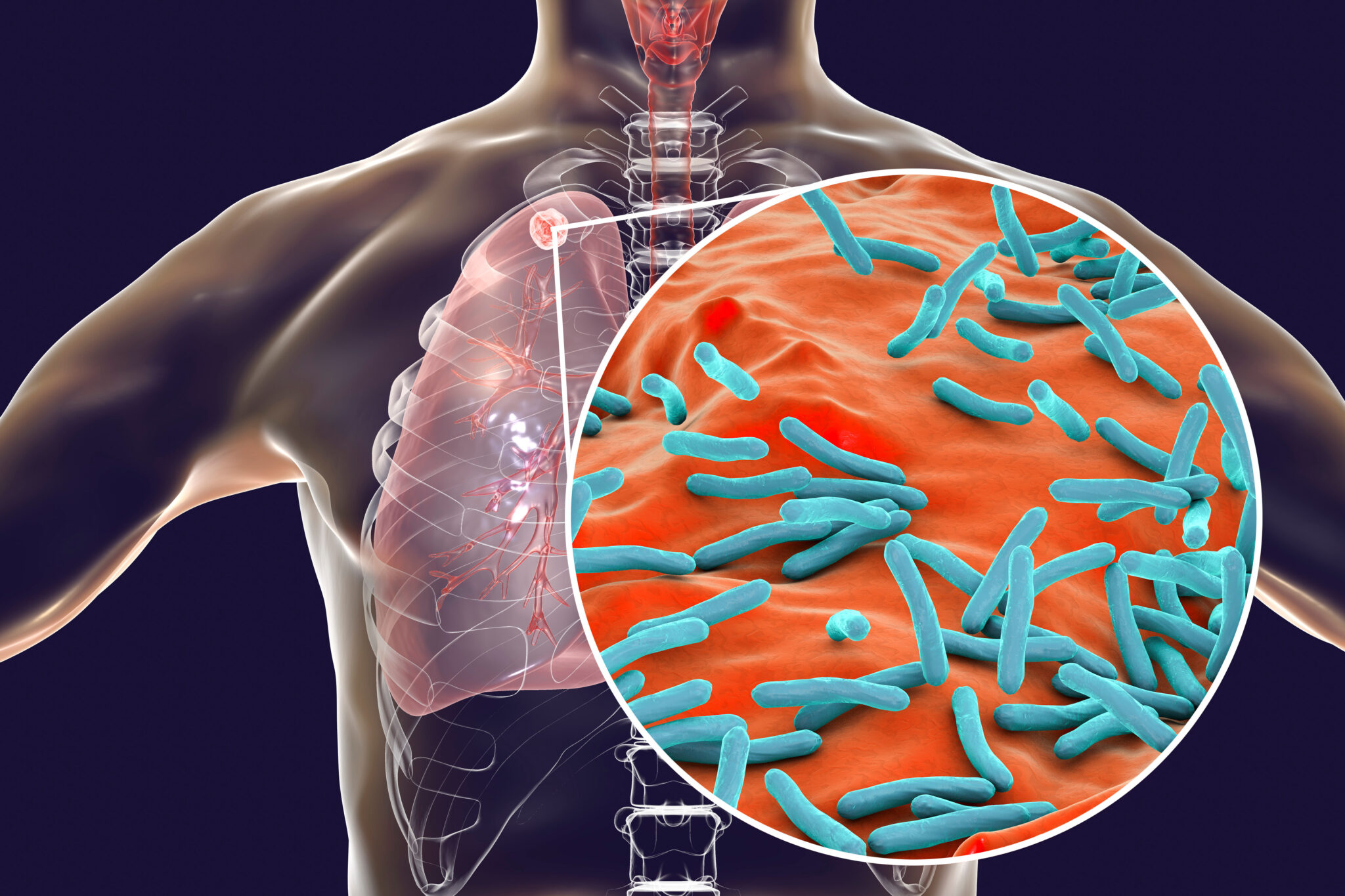
Tuberculosis (TB) is a leading cause of mortality due to infectious disease, but the factors determining disease progression are unclear. Transcriptional signatures associated with type I IFN signaling and neutrophilic inflammation were shown to correlate with disease severity in mouse models of TB. Here we show that similar transcriptional signatures correlate with increased bacterial loads and exacerbate pathology during Mycobacterium tuberculosis infection upon GM-CSF blockade. Loss of GM-CSF signaling or genetic susceptibility to TB (C3HeB/FeJ mice) result in type I IFN-induced neutrophil extracellular trap (NET) formation that promotes bacterial growth and promotes disease severity. Consistently, NETs are present in necrotic lung lesions of TB patients responding poorly to antibiotic therapy, supporting the role of NETs in a late stage of TB pathogenesis. Our findings reveal an important cytokine-based innate immune effector network with a central role in determining the outcome of M. tuberculosis infection.
REFERENCES
Lúcia Moreira-Teixeira et al. Type I IFN exacerbates disease in tuberculosis-susceptible mice by inducing neutrophil-mediated lung inflammation and NETosis. Nature Communications volume 11, Article number: 5566 (2020). https://doi.org/10.1038/s41467-020-19412-6
PRODUCT HIGHLIGHTS
The following Bio X Cell in vivo grade monoclonal antibodies were featured in the publication:
- Anti-mouse GM-CSF antibody (Clone MP1-22E9, Bio X Cell catalog no. BE0259)
- Anti-mouse IFN? antibody (Clone XMG1.2, Bio X Cell catalog no. BP0055, BE0055)
- Anti-mouse Ly6G antibody (Clone 1A8, Bio X Cell catalog no. BP0075-1, BE0075-1)
- Anti-rat IgG2a isotype control (Clone 2A3, Bio X Cell catalog no. BP0089, BE0089)